
Every bar spends money on spirits, most spend money on glassware, and the good ones spend money on ice. It’s the only ingredient in a cocktail that’s free from the tap and still worth investing in, which tells you something about how much work it does.
Ice sets the temperature, the texture and the pace of a drink. It’s also the most common reason a cocktail made at home tastes flat compared to the same recipe in a bar.
Temperature Is The Job
A properly made shaken cocktail arrives at around minus seven degrees, which is colder than a domestic freezer sets its shelves. That temperature does several things at once.
Cold suppresses the burn of alcohol, thickens the texture slightly and mutes sweetness, which is why a drink that tastes balanced cold tastes syrupy once it warms up. The whole recipe is written for the drink at its serving temperature, and a lukewarm cocktail is a different drink entirely.
Cold Ice And Wet Ice
Ice isn’t automatically at zero degrees. A well run bar holds its ice several degrees below freezing, so it comes out dry to the touch and rings when it hits the tin.
Freezer ice from a domestic tray usually sits right at the melting point, already wet, and it starts watering your drink down before it’s chilled anything. That single difference accounts for most of the gap between a home cocktail and a bar one.
Water Quality Goes Into The Glass
Anywhere between a fifth and a quarter of the finished drink is melted ice, which makes the water an ingredient by volume rather than an afterthought.
Freezer ice absorbs odours. Anyone who’s tasted last week’s fish in their gin and tonic knows this. Bars store ice covered and turn it over constantly, and at home a sealed container solves the problem for almost nothing.
Clarity Isn’t Just Cosmetic
Clear ice looks impressive, and the reason it matters is structural. Cloudiness comes from trapped air and dissolved minerals, and those trapped pockets create weak points that make the cube break down faster.
Denser, clearer ice melts more slowly and gives you a drink that holds its shape for longer. Directional freezing in an insulated container gets you most of the way there at home, though plenty of excellent bars use standard machine ice and simply keep it cold and dry.
Different Formats, Different Jobs

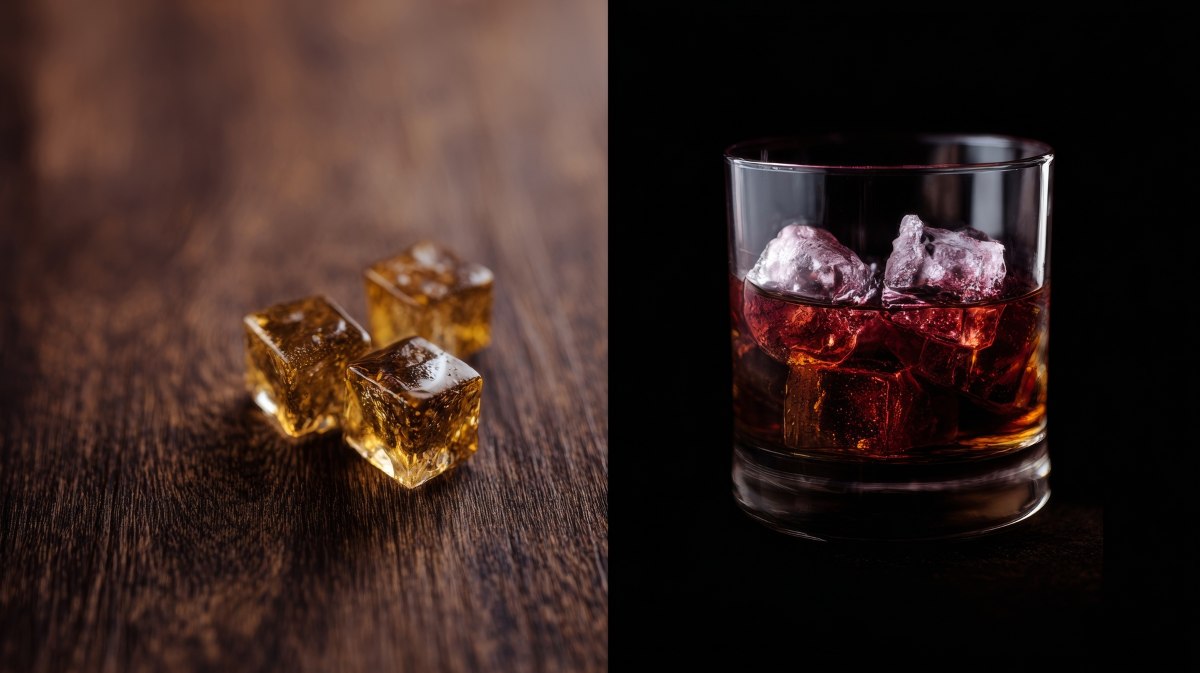
Bars keep several types on hand because a drink’s design assumes a particular one. Large cubes for stirred spirit forward drinks, crushed for juleps and tiki builds, standard cubes for shaking and for highballs.
Getting this wrong throws the balance. A drink built for large ice cubes and crushed ice in specific places behaves differently when you swap them, and the recipe was written with that behaviour in mind.
Fill The Glass Properly
This one’s counterintuitive and it matters. A glass packed to the top with ice melts more slowly than a glass with three lonely cubes in it, because the mass keeps itself cold.
Being stingy with ice produces a warmer, more watery drink. The same applies to the shaker, which should be filled properly rather than half loaded.
Shaking Versus Stirring
Both methods use ice to chill and dilute, and they do it at different speeds. Shaking is violent, fast and aerating, landing a drink at roughly 20% to 25% dilution in twelve to fifteen seconds.
Stirring is slower and gentler, getting to a similar place over about thirty seconds while keeping the drink clear and silky. Neither figure is fixed, since ice quality and technique shift them, and bartenders disagree about the ideal targets more than you’d expect.
Where It Shows Most
Ice management becomes obvious at scale. Serving a room of 150 people means holding enough cold, dry ice to last the evening without the last drinks arriving watery.
Rhum Tavern is a cocktail bar and grill at 48 Margaret Street in Fitzrovia, two minutes from Oxford Circus, pouring from a collection of over 400 rums. If you’re planning something, our West End party space holds up to 150 guests across the Captain’s Quarters, the Back Ship or the full venue, and you can send an enquiry through the site for dates and drinks packages.
Frequently Asked Questions
Why does ice matter so much in cocktails?
Because it controls both temperature and dilution, and roughly 20% to 25% of a finished cocktail is melted ice. Poor ice chills slowly while melting fast, which leaves you with a drink that’s warm and watery at the same time.
How do I make clear ice at home?
Freeze water directionally, using an insulated container with the lid off so it freezes from the top down. Discard the cloudy bottom section and cut the clear block into cubes. Boiling the water first helps a little, though it won’t produce fully clear ice on its own.
Does ice absorb smells in the freezer?
Yes, readily. Ice picks up odours from anything stored uncovered nearby, and those flavours end up in your drink. A sealed container fixes it.
Should I fill the glass completely with ice?
Yes. A full glass of ice melts more slowly than a half empty one because the combined mass stays colder for longer, so being generous gives you a colder, less diluted drink.
Is filtered water better for cocktail ice?
It helps, particularly in hard water areas where minerals affect both taste and clarity. It’s a smaller factor than temperature and storage, so sort those first.