


Watch a good bartender closely and you’ll spot a small ritual most guests miss. Just before your drink is strained and served, they dip a straw into the shaker, cap the top with a finger, lift out a few drops and taste them. The whole move takes two seconds. Some guests find it reassuring. Others quietly wonder whether someone just drank part of their cocktail.
Nobody drank your cocktail. What you witnessed is quality control, and it’s one of the clearest signs you’re in a bar that takes drinks seriously. Here’s what’s actually happening, and why the best bars in the world insist on it.
The Straw Taste, Explained
The technique is called a straw taste, and the mechanics matter. The bartender never puts the straw to their lips and back into your drink. They draw a tiny sample out by trapping liquid in the straw with a fingertip, taste those few drops away from the shaker, and bin the straw. Done properly it’s completely hygienic, uses less than a millilitre of your drink, and happens before the cocktail ever touches your glass. Health inspectors in serious cocktail cities are familiar with it. So is every respected bar programme from London to Tokyo, and plenty of them make it mandatory for every shaken or stirred drink that leaves the bar.
The reason they mandate it is simple. It’s the only step in the process that catches a problem before you do.
Ingredients Drift, Even When Recipes Don’t
A cocktail recipe looks like a fixed formula. In practice, half the ingredients in it are moving targets.
Citrus is the biggest offender. The lime juice squeezed at 4pm is brighter and sharper than the same juice at 10pm, because fresh juice changes character within hours of pressing. Individual limes vary too. One batch runs acidic, the next runs almost sweet, and a recipe calibrated on Tuesday’s limes can sit noticeably off on Friday’s. Sugar syrups thicken or thin depending on who made the batch and how. Even spirits change, since distilleries adjust blends between bottlings more often than their labels admit.
A bartender who follows the spec perfectly can still produce an unbalanced drink through no fault of their own. The straw taste is how they catch it. Two drops on the tongue tells them whether today’s limes need an extra few millilitres of syrup to bring the drink back to where it should sit, on the line where sweet, sour and strength hold each other in tension.
Consistency Is The Actual Product
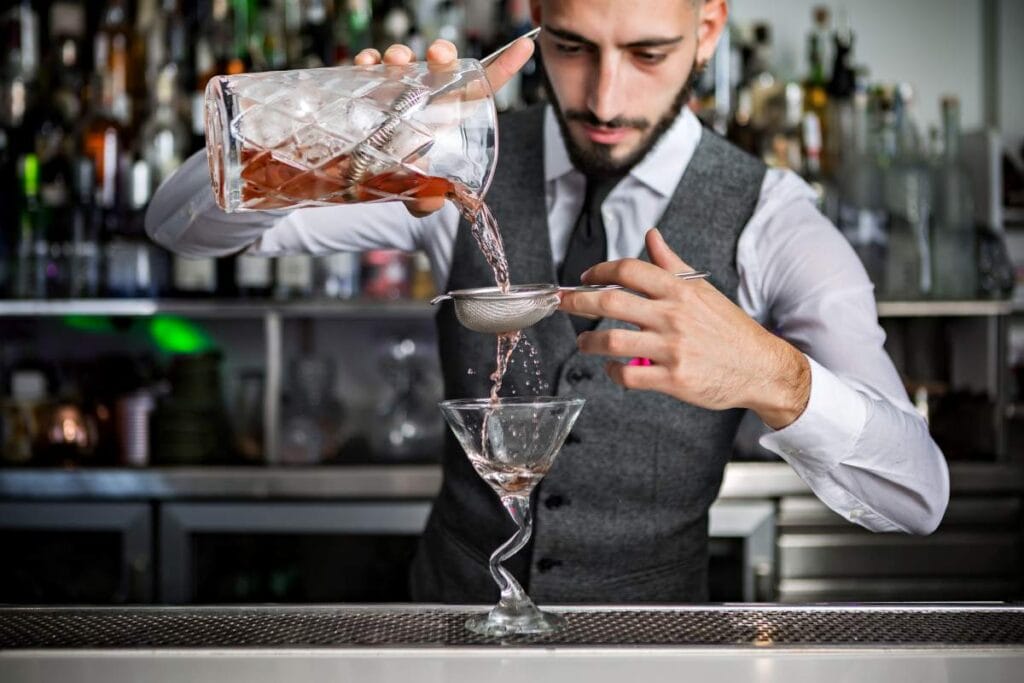
Here’s the part that separates a decent bar from a great one. Anyone can make one good Daiquiri. The hard job is making the two-hundredth Daiquiri of the week taste identical to the first, across different bartenders, different shifts and different crates of limes.
Guests rarely think about consistency until it fails. You order the drink you loved last month, it arrives subtly wrong, and you can’t name the problem but you notice it. That small disappointment is what tasting prevents. When every drink is checked against the same standard before it’s served, the version you fell for is the version you get, every time. Chefs taste every sauce before it leaves the pass for exactly this reason, and nobody finds that alarming. Bartending simply adopted the same discipline.
There’s an honest caveat here. Not every drink can be straw-tasted, since a built drink like a Dark ‘n’ Stormy comes together in the glass itself, and no sensible bartender is sampling those. For built drinks, consistency comes from tight specs and good habits upstream: fresh juice dated and rotated, syrups batched to a standard, measures actually measured. Tasting is one tool in a larger system, and the bars that use it tend to be rigorous about all the rest too.
Scale Raises The Stakes
All of this gets harder when the numbers go up. A quiet Tuesday gives a bartender time to check everything. A full-venue party for 150 guests does not, which is why event bartending leans on pre-batching: mixing the non-perishable core of a cocktail in advance, in volume, then finishing each serve fresh. Batching only works if the batch itself is tasted and corrected before service, because an error in a five-litre batch becomes fifty flawed drinks instead of one.
We run that exact discipline for private parties at Rhum Tavern, where our Central London private event space hosts everything from birthday gatherings of fifty in the Captain’s Quarters to full takeovers of the ship for 150. Every batch is tasted, adjusted and signed off before the first guest walks the plank through the door, so the last cocktail of the night holds the same standard as the first.
What It Means When You See It
So the next time you spot that quick dip of the straw, read it correctly. The bartender is checking your drink against the version it’s supposed to be, catching the variables you’d otherwise taste yourself, and throwing the evidence away. It costs them two seconds and a millilitre. It buys you a drink that’s right.
The bars that skip it aren’t necessarily bad. But the bars that insist on it are telling you something about their standards, and it’s the kind of detail worth choosing a bar for.