
On paper the two look identical. Both sell alcohol, both have stools, and both will happily take your card behind the till. So when a cocktail bar charges £14 for a drink while the pub round the corner charges £6 for a gin and tonic, you’re entitled to ask what the difference actually is, and whether it’s worth the gap.
The short answer is that a regular bar sells drinks and a cocktail bar makes them. The long answer is more interesting, and once you know what to look for, you’ll be able to judge within five minutes of walking in whether a venue deserves the word “cocktail” on its sign.
The Drinks Are Built, And That Changes Everything
In a standard bar, most orders are assembled: a spirit meets a mixer, ice goes in, done. Nothing wrong with that, and on a Friday night with a queue three deep it’s the only model that works. A cocktail bar runs on a different production line entirely. Behind the scenes there’s a prep shift you never see, where citrus is juiced fresh that day, syrups are made in-house, garnishes are cut, and ice is managed like an ingredient because it is one.
Ice deserves its own sentence, honestly. Regular bars use whatever the machine spits out. Cocktail bars obsess over it, using large slow-melting cubes for spirit-forward drinks, crushed ice for tiki serves, and freezer-chilled glassware so your Daiquiri isn’t lukewarm ninety seconds after it lands. Dilution and temperature account for a huge share of how a drink tastes, and this is where the price difference starts earning its keep.
Then there’s the menu itself. A pub’s drinks list is essentially an inventory. A proper cocktail bar’s list is authored, with drinks designed for the venue, tested over weeks and often built around house-made ingredients you can’t order anywhere else. That’s the entire idea behind signature cocktails; you can get a Negroni anywhere, but you can only get a bar’s own creations in that one room.
The People Behind The Bar Trained For This
Pulling a pint takes a shift to learn. Making cocktails at speed, to spec, consistently, takes years, and the staffing reflects it. Bartenders in serious cocktail venues study classic recipes and their histories, learn to balance sweet against sour by taste, and can look at your half-finished drink and your expression and recommend the right next order. Ask a question in a good cocktail bar and you’ll get an answer, sometimes a longer one than you bargained for. Ask what rum to try and you may be there a while, pleasantly.
There’s a fair counterpoint here. Some of the best hospitality in Britain happens in ordinary pubs, delivered by people who know every regular’s name, and no amount of technique replaces that warmth. The best cocktail bars understand this and combine both. The worst ones hide behind mixology theatre and forget to be friendly, which is why “great drinks, cold service” reviews exist. Skill and welcome are separate things, and you’re entitled to expect both.
The Room Is Part Of The Drink
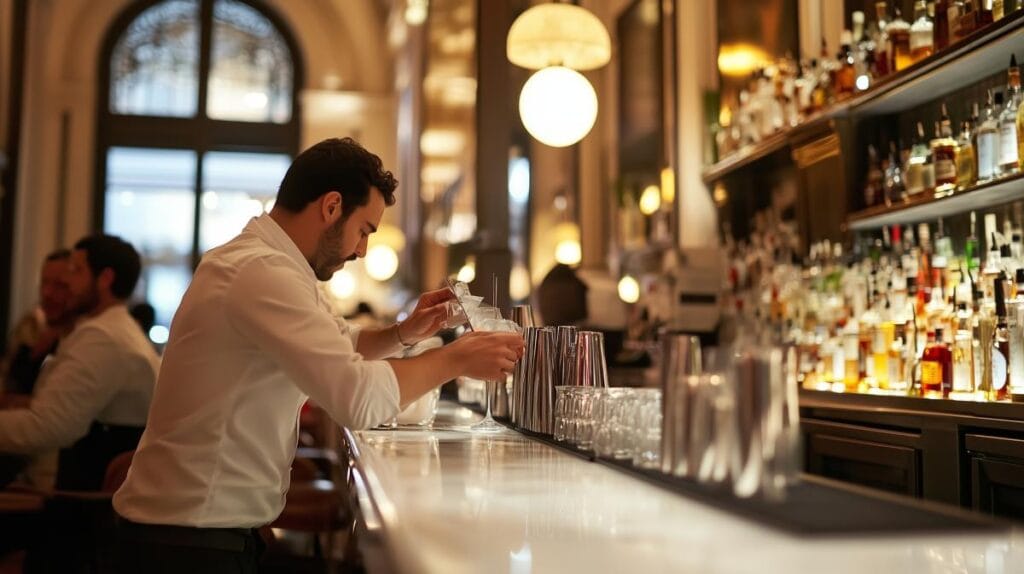
Regular bars are furnished. Cocktail bars are designed, and the difference is deliberate. Lighting, music volume, seat spacing and even glassware are decisions aimed at a specific experience, usually one where you can hear the person opposite you. That’s why cocktail bars skew towards dates, celebrations and conversations that matter, while the pub remains the rightful home of watching the match with a pint.
Some venues push the design further and build an entire world. Ours happens to be a pirate ship. Rhum Tavern is styled as the hull of The Inferno, a 1650s galleon run aground on Margaret Street, two minutes from Oxford Circus, complete with bespoke handmade glassware you won’t find in any other venue and a back bar of more than 400 rums. We’d argue, with obvious bias, that if you’re paying cocktail bar prices, the room should give you something a high-street chain can’t. Immersion is the difference between going out for drinks and going somewhere.
The same logic applies when the occasion is bigger than a table for two. A regular bar can rope off a corner for your birthday. A venue built around experience can hand you the whole ship, which is exactly what our private event space in Central London offers, from the fifty-guest Captain’s Quarters to full exclusive hire for 150, with cocktails batched and served to the same standard as a quiet Tuesday.
So Which One Do You Actually Want?
Both, at different times, and anyone who tells you otherwise is selling something. The £6 gin and tonic and the £14 signature serve are different products for different nights, and the honest test is fit. Big group, big screen, big volume: pub. A date, a celebration, a drink you’ll remember next week, or a genuine curiosity about what’s in the glass: cocktail bar, every time.
And if the night calls for the second kind, you now know exactly what to check when you walk in. Fresh citrus behind the bar, ice treated with respect, a menu somebody clearly wrote, and staff who light up when you ask a question. Find all four in one room, ideally one shaped like a pirate ship, and settle in. You’re in the right place.