
Two bottles, both legally rum, both made from sugar cane, and they can taste so unalike that people refuse to believe they belong to the same category.
The split comes down to one decision made on the day the cane’s cut, and everything after it follows from that choice.
The Raw Material
Molasses rum starts with the thick dark syrup left once sugar’s been crystallised out of pressed cane. Roughly half of what remains is still fermentable sugar. Molasses is stable, it travels, and it can be stored for months, which is why the overwhelming majority of the world’s rum is made this way.
Agricole starts with the fresh juice, pressed straight from cut cane and fermented within about 24 to 36 hours. Cane begins degrading as soon as it’s harvested, so the distillery has to sit near the fields and production runs on a harvest season lasting a few months.
Where Each One Comes From
Molasses rum’s made across the English and Spanish speaking Caribbean and far beyond it. Jamaica, Barbados, Guyana, Cuba, Puerto Rico, the Dominican Republic, and plenty of producers in Asia and Latin America all work from molasses.
Agricole’s overwhelmingly French Caribbean. Martinique’s the reference point, with Guadeloupe, Marie-Galante and Haiti also producing cane juice rums, though Haiti’s clairin follows its own traditions entirely.
The Martinique Rules
Martinique carries an AOC, granted in 1996, which regulates cane varieties, permitted yields, fermentation, distillation strength and ageing.
Very little rum anywhere in the world is regulated to that degree. It’s one of the few places where the label genuinely guarantees something about the liquid inside.
How They Taste
Molasses rums lean towards caramel, toffee, dried fruit, banana and baking spice. The style varies enormously depending on the still and the fermentation, so a light Cuban rum and a heavy Jamaican pot still rum are both molasses based and share very little on the palate.
Agricole reads as grassy, vegetal and mineral, with green olive, black pepper and a distinctly earthy edge. Even the aged expressions keep that sappy quality underneath the oak. If you’ve only drunk molasses rum, your first agricole will probably confuse you, and most people come round on the second or third pour.
In Cocktails
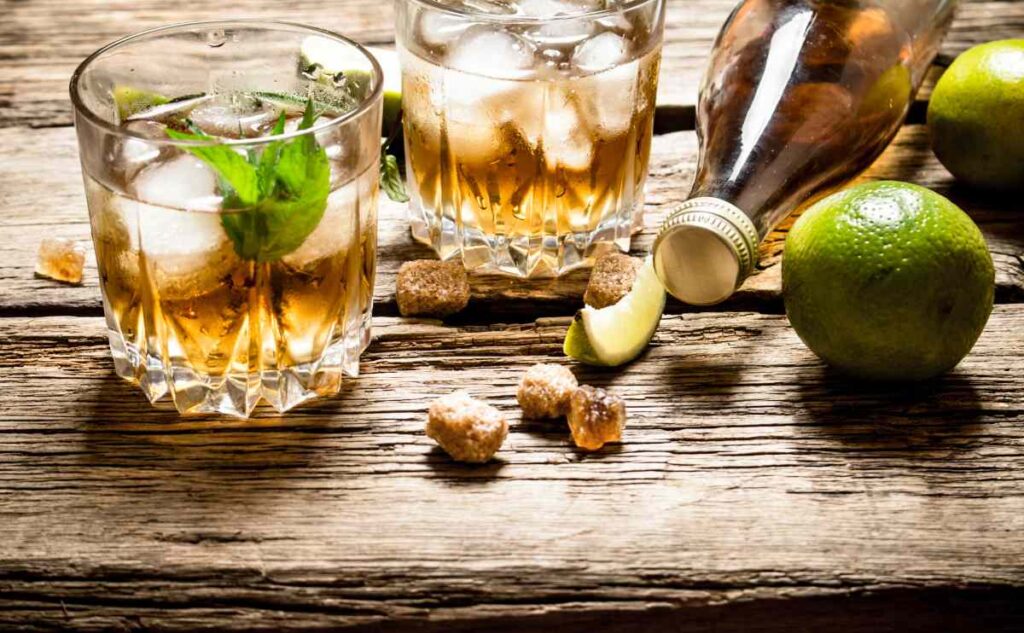
The classics were largely built on molasses rum, so a Daiquiri, a Mojito or a Mai Tai made with it will taste like the version you know.
Agricole changes those drinks significantly. A Ti’ Punch, the standard drink of Martinique and Guadeloupe, is agricole blanc, lime and cane syrup served without ice, and the drinker traditionally mixes it themselves. Swapping agricole into a tiki drink is worth trying at home, since the grassy notes work well against orgeat and falernum.
Which To Buy
If you’re building a home bar from scratch, start with molasses rum, because it covers more recipes and costs less. Any guide to rum will point you towards a decent white and an aged bottle as the sensible foundation.
Add an agricole blanc once you’ve got those, ideally a Martinique bottle at 50% to 55% ABV, since the higher strength is standard for the category and the drop to 40% loses a lot of what makes it interesting. Aged agricole, labelled vieux or VSOP, spends at least three years in oak and sits somewhere between the two worlds.
Taste Them Side By Side
Reading about the difference is less useful than pouring both. Take a molasses based white rum and an agricole blanc, nose them one after the other, and the gap will be obvious within seconds.
Rhum Tavern keeps more than 400 rum expressions at 48 Margaret Street in Fitzrovia, covering both camps and most of the ground between them, two minutes from Oxford Circus. Our tastings are the easy way to do this properly: an evening dedicated to rum, poured light to heavy, with the bar team explaining each one. Book a tasting through the site, or reserve a table and ask us to set up the comparison.
Frequently Asked Questions
Is Agricole Rum Stronger Than Molasses Rum?
Often, yes, though that’s a bottling decision rather than a production one. Agricole blanc is commonly sold at 50% to 55% ABV because the higher strength suits the style, while most molasses rums are bottled between 40% and 43%.
Why Is Agricole Rum More Expensive?
Fresh cane juice has to be pressed and fermented within roughly a day, so the distillery needs its own cane and can only produce during harvest season. That limits output significantly compared with molasses, which can be stored and shipped year round.
What Is The Difference Between Rhum And Rum On A Label?
The spelling with an h usually signals a French Caribbean cane juice rhum, and rhum agricole appears on the label when the spirit meets that definition. It’s a strong indicator, though not a legally protected spelling everywhere.
Can I Use Agricole In Place Of Molasses Rum In Cocktails?
You can, and the results are often excellent, but the drink will change character noticeably. Agricole brings grassy, peppery notes that suit sours and tiki drinks well and can clash with very sweet or cream based recipes.
Does Agricole Rum Have To Come From Martinique?
No. Guadeloupe, Marie-Galante, Haiti, Madeira and a handful of other places all produce cane juice rums. Martinique’s simply the best known, largely because its AOC sets out stricter production rules than most rum regions have.