
Every bottle of rum starts life as sugarcane and ends as a spirit that can taste of anything from fresh grass to burnt toffee. The journey between those two points is distillation, and while distillers guard their exact recipes closely, the fundamental process is the same everywhere from a Jamaican estate to a Cornish craft operation. Here’s how it works, step by step. If you’re new to the spirit entirely, our complete guide to rum covers the styles and regions before you dive into the mechanics.
Step 1: Choosing The Base Material
Distillers begin with one of two raw materials. The majority use molasses, the dark syrup left behind after sugar refineries crystallise sucrose out of cane juice. Molasses is stable, cheap to transport and dense with fermentable sugar, which is why it became the industry standard centuries ago.
The alternative is fresh sugarcane juice, pressed and fermented within hours of harvest before it spoils. This is the agricole method, practised mainly in Martinique, Guadeloupe and Haiti. The choice made at this stage shapes everything downstream. Molasses gives richer, rounder spirits, while cane juice gives brighter, more vegetal ones.
Step 2: Fermentation
The base material is diluted with water and pitched with yeast in large tanks. Yeast eats sugar and produces alcohol, carbon dioxide and hundreds of flavour compounds along the way. The result is a beer-like liquid called wash, sitting at roughly 5 to 10% ABV.
Fermentation time is one of the great stylistic levers in rum. A quick 24-hour ferment with cultivated yeast produces a clean, light wash. A slow ferment lasting one to two weeks, sometimes using wild yeasts and bacteria, produces a wash loaded with esters, the fruity, funky compounds that give Jamaican rum its famous over-ripe banana and pineapple character. Some traditional Jamaican distilleries even add dunder, the leftover liquid from previous distillations, to push ester levels higher still. It sounds unappetising. It tastes extraordinary.
Step 3: Distillation
The wash goes into a still, where the real separation happens. Alcohol boils at 78.4°C and water at 100°C, so heating the wash lets the distiller drive off alcohol vapour, capture it, and condense it back into liquid at a much higher strength.
Two types of still dominate. Pot stills work in batches, like an oversized copper kettle, and they’re relatively inefficient, which is precisely the point. Plenty of flavour compounds carry over with the alcohol, producing heavy, characterful spirit. Column stills run continuously, with the wash trickling down through a series of plates while steam rises through it, stripping out alcohol with far greater precision. The result is a lighter, cleaner spirit at higher strength.
Neither approach is better. Pot stills gave the world the muscular rums of Jamaica and Guyana, and columns gave it the elegant, dry rums of Cuba and Puerto Rico. Many producers run both and blend the results.
Step 4: Making The Cuts
Distillation doesn’t produce one uniform liquid. The first vapours to come off the still, called the heads, contain volatile compounds like methanol and acetone that nobody should drink. The final portion, the tails, is oily and harsh. The distiller’s craft lies in cutting to the hearts, the clean middle run that carries the good alcohol and the desirable flavours.
Where exactly those cuts fall is a judgement call, made by instrument readings and, at traditional distilleries, by nose and experience. Cut early and you get a lighter spirit. Cut generously into the tails and you keep more weight and funk. Small movements here produce big differences in the glass.
Step 5: Ageing
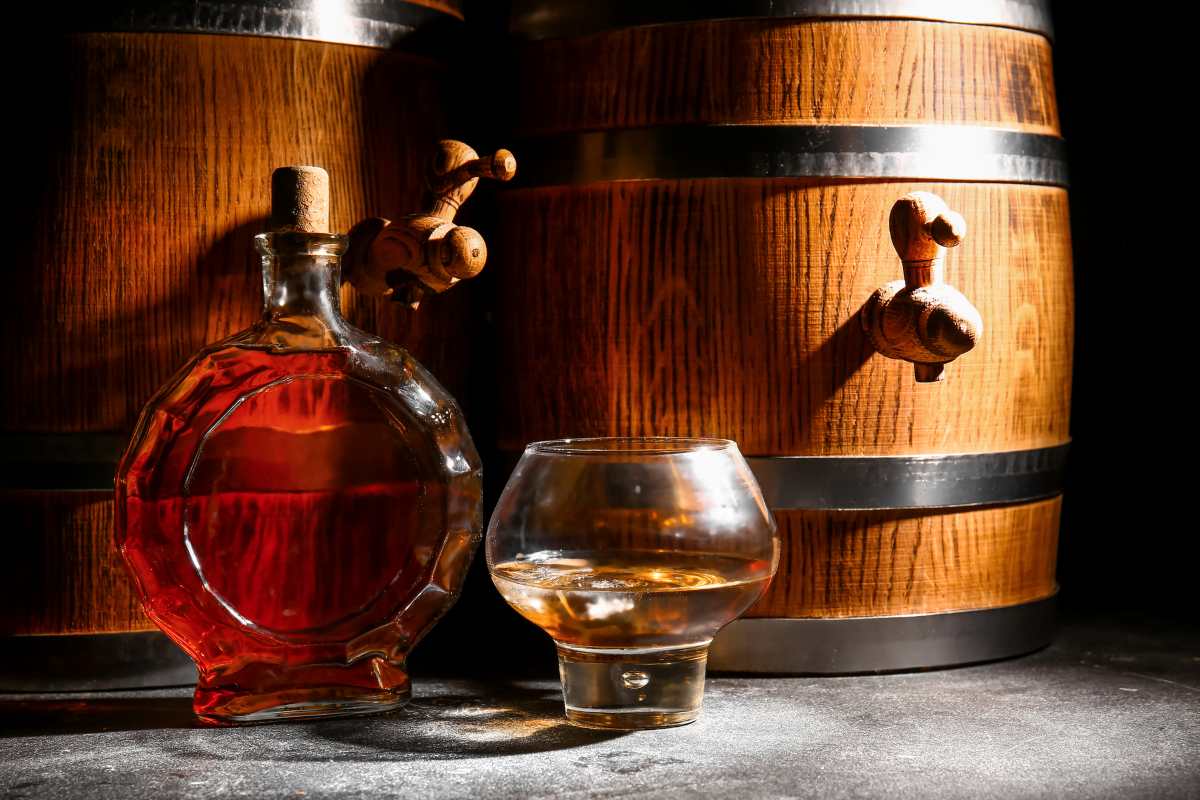
Fresh off the still, rum is clear, fiery and raw. Most of it then goes into oak barrels, typically casks that previously held bourbon, where it softens and picks up vanilla, caramel, coconut and spice from the wood.
Climate matters enormously at this stage, and it’s where rum diverges from Scotch. In the Caribbean heat, spirit interacts with oak far faster than it does in a cold Scottish warehouse, and evaporation losses, the so-called angels’ share, can run to 6% or more per year against Scotland’s 2%. A well-kept eight-year-old Barbadian rum can show the maturity of a much older whisky. It also explains why genuinely old tropical-aged rum is scarce and priced accordingly. The angels in the Caribbean drink like pirates.
Step 6: Blending And Bottling
Very few rums are the product of a single barrel. Master blenders marry casks of different ages, still types and warehouse positions to hit a consistent house profile, then cut the spirit with water down to bottling strength, usually 40 to 43% ABV. Some producers filter dark colour out of aged rum to sell it as premium white. Others add caramel for colour consistency, a practice that’s legal in most regions and quietly controversial among enthusiasts.
Tasting The Process
Once you know the steps, you can taste them; that banana note in a Jamaican rum is long fermentation. The silkiness in a Cuban-style ron is the column still. The vanilla running through almost every aged rum is American oak doing its patient work.
The quickest way to connect the theory to the liquid is to taste contrasting styles side by side with someone who can point out what you’re noticing. Our guided flights at Rhum Tavern do exactly that, drawing on a collection of over 400 bottles a few minutes’ walk from Oxford Circus. Book a London rum discovery experience and you’ll leave able to read a back label like a distiller reads a still.