
Say Caribbean rum and most people picture one bottle. The region actually produces a spread of styles so wide that two islands ninety miles apart can turn out spirits with almost nothing in common.
The reason’s historical. Each colonial power brought its own distilling traditions, and those traditions stuck long after the empires left.
The Three Broad Families
Bartenders group Caribbean rum by the language the producing island inherited, which sounds like a lazy shortcut until you taste your way through it. Spanish heritage islands make lighter, column distilled rums. English heritage islands lean heavier and use pot stills. French heritage islands work from fresh cane juice.
It’s a rough map with plenty of exceptions, and it’ll get you further than any other system.
Cuba
Cuban rum’s the reference point for the light style. Column distilled, filtered, and aged even when the liquid comes out clear, it’s built for mixing above everything else.
The house style is dry, clean and faintly grassy, with none of the heavy fruit you find further east. Havana Club is the obvious name, and the whole Cuban tradition exists because that’s what a Daiquiri and a Mojito ask for.
Jamaica
Jamaica sits at the opposite end. Long fermentations, pot stills and a willingness to let wild yeast into the process produce rums thick with esters, the compounds behind that unmistakable overripe banana and varnish character.
Hampden Estate and Worthy Park make some of the heaviest rums on earth, measured in grams of ester per hectolitre of pure alcohol. Appleton Estate blends pot and column for something more approachable. Wray & Nephew Overproof at 63% is the island’s everyday bottle and the one most British drinkers meet first.
Barbados
Barbados has a fair claim to being the birthplace of rum, with Mount Gay tracing a deed back to 1703. The house style blends pot and column distillate into something balanced between the Jamaican and Cuban poles.
Foursquare has become the distillery serious collectors follow, largely because Richard Seale bottles without added sugar or colouring and says so loudly. Barbadian rum is the sensible answer when someone asks what to buy first.
Guyana
Technically South American, always counted as Caribbean in rum terms, and the most unusual producer in the region. Diamond Distillery houses a set of wooden stills salvaged from closed estates, including the Port Mourant double wooden pot still and the Enmore wooden Coffey still.
Wood contributes flavour in a way copper doesn’t, which is why Demerara rum carries that dark, smoky, burnt sugar weight. El Dorado is the familiar label, and the independent bottlings are where things get interesting.
Martinique And Guadeloupe
The French islands work from fresh pressed cane juice, which gives you rhum agricole. Grassy, peppery and mineral, it’s the style that divides people hardest on first taste.
Martinique carries an AOC granted in 1996, regulating cane varieties, yields and distillation strength in a way almost nothing else in rum is regulated. The molasses vs agricole rum split is the single biggest dividing line in the category, and the French islands are where you go to understand it.
Trinidad, The Dominican Republic And Beyond
Trinidad produces light column rums with a slightly nutty edge, Angostura being the name you’ll recognise. The Dominican Republic sits in the Spanish tradition with Brugal and Barceló, generally softer and rounder than Cuban rum.
Haiti’s clairin deserves a mention as the outlier. Unaged, made in small rural distilleries from cane juice or syrup with wild fermentation, it tastes like almost nothing else, and it’s become a cult category over the past decade.
Tasting Across The Region
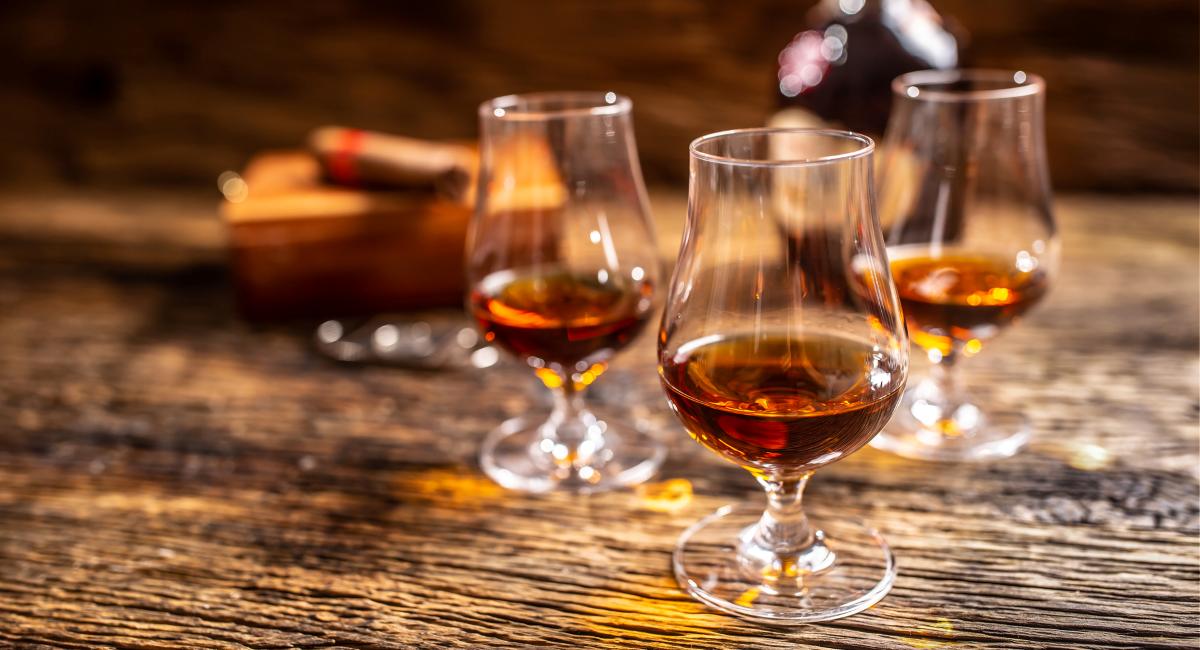
Moving through these styles in one sitting is where the differences stop being theoretical. Light to heavy, Cuba to Guyana, with the French islands somewhere off to the side.
Rhum Tavern holds more than 400 rum expressions at 48 Margaret Street in Fitzrovia, two minutes from Oxford Circus, inside a room built as the hull of a 1650s ship. A guided Caribbean spirit tasting with our bar team takes you through the region in a sensible order, and you can book one through the site or reserve a table and ask us to line up a comparison.
Frequently Asked Questions
What is the difference between Spanish, English and French style rum?
Spanish style rums from islands like Cuba and the Dominican Republic are usually column distilled and lighter. English style rums from Jamaica, Barbados and Guyana use more pot still distillate and taste heavier. French style means agricole, made from fresh cane juice in Martinique, Guadeloupe and Haiti.
Which Caribbean island makes the best rum?
There’s no single answer, since the styles are doing different jobs. Barbados is the safest all-rounder, Jamaica suits anyone who wants intensity, Cuba is built for cocktails, and Guyana rewards people who like depth and smoke.
Is Demerara rum from Guyana or Demerara?
Both, in a sense. Demerara is a region of Guyana, and the name now describes the style of rum made at Diamond Distillery using the historic wooden stills gathered there from closed estates.
What does overproof rum mean?
Any rum bottled well above standard strength, usually above the traditional 57.15% proof point. Wray & Nephew from Jamaica sits at 63% and is used in cocktails and floats rather than sipped straight.
Does all Caribbean rum taste sweet?
No. The sugar ferments into alcohol during production, so an unaltered rum contains none. Some producers add sugar after ageing, a practice called dosage, which varies by country and is rarely stated on the label.